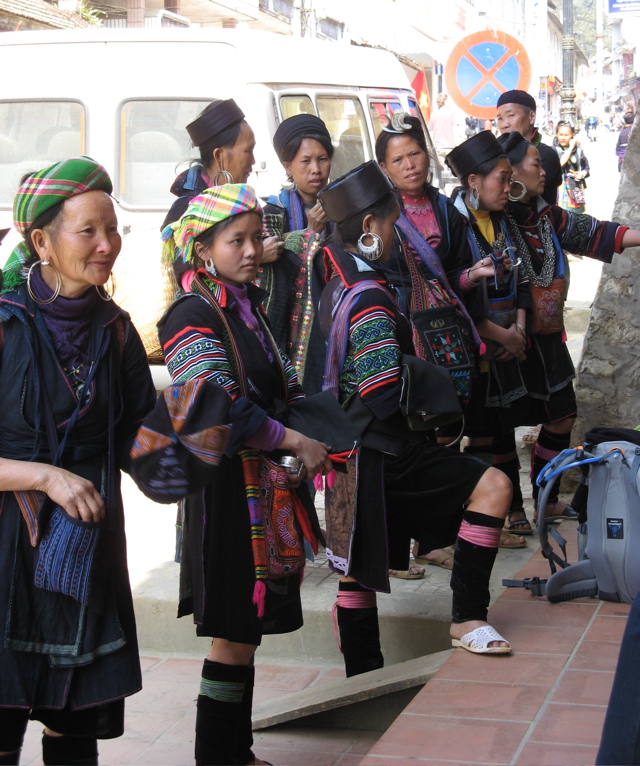
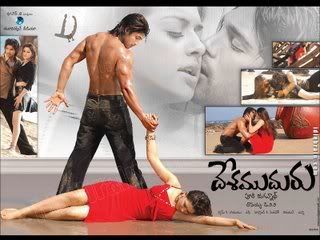
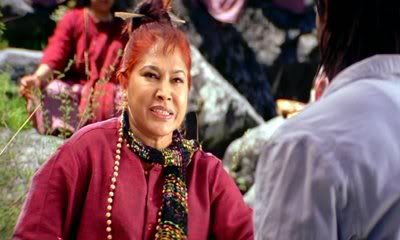
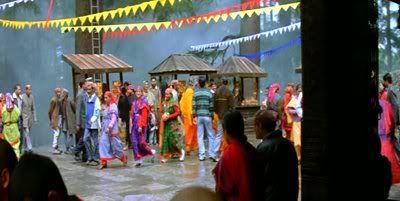
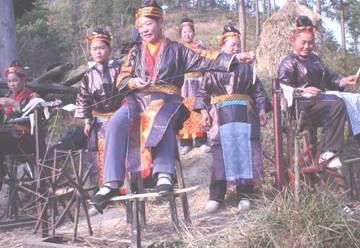
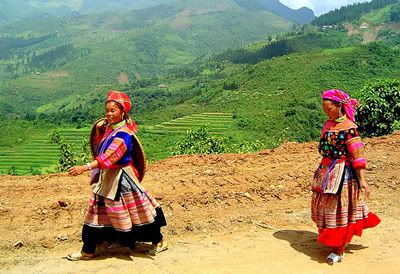
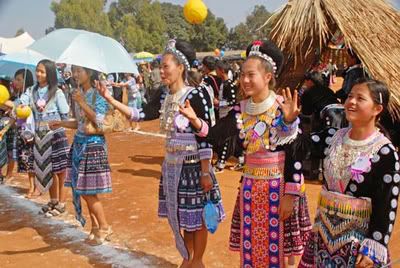
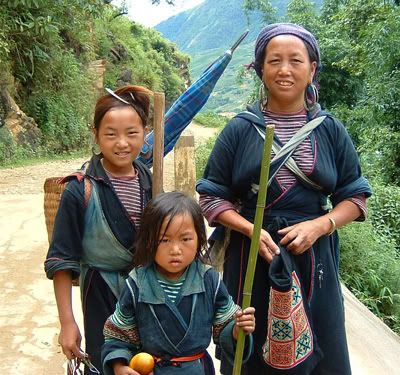
I know, I haven't posted much since ??? When was it? Okay, I just went and look - it was October 24th - woah, that was nearly almost a full week ago!! Makes sense. Since then, I was busy with one of my friend's annual Halloween Party on Saturday. If you have MySpace or Facebook, I have pictures posted there. I went as a nerd. Some of my friends can't believe I went as one. One of my friends showed up in a beautiful Indian saree - she didn't wrap it up right at all! All she did was wrapped it around her waist with no pleats and safety pinned it. After Halloween party, I did watch more Bollywood movies but just haven't found the time to make screen caps for reviews here. I have to study more. I've been lazy. So for my friends and readers to know I'm still alive. I decided to just think about something and post. I posted this at Bollywhat a year ago or so. However, I've mentioned it on a few of my posts before - Desamuduru & Chak De IndiaOccassionally when I see someone who I think is Indian, I'll ask them....then I'll talk to them about how much I love Hindi films and mention I've seen a few Tamil and Telugu films. What amazes me is for the past few times, many of them thought that I was from Northeast India. So...I do some research and I could see why! A lot of Northeast Indian people do look Southeast Asians/PanAsians. I've been told that Hmong outfits look Nepalese. I guess because our outfits are more tribal looking. I am just fasinated by the last few times Indians think I'm from the Northeast area. I do get where you're coming from though. From the geographic view, Northeast India seems to be isolated in its own area there. I did think about the location and many Southeast Asians/PanAsians migrating there. Of course, by now, many of you know that I am Hmong. If not, do you not read my 411 intro? :DNortheast Indians
Again as I said, I'm very interested in Northeast India cause it reminds me very much of my culture - very tribal and language than all of Thailand. I'm sure the languages in Northeast India is similar to the rest of India. That's how Hmong is compared to Thai and Laos. Thailand and Laos used to be one country - Siam. Similar tones.
Since I've been really interested in Northeast India, I bought a travel guide to India which divides India in 5 main regions. I love it. Me, personally, I have a lot of similarities with the Northeast Indians because my ethnicity is Hmong which is a tribal group in north Thailand and speaks a different language. Coincidently, the past few monthly Desi magazines and newsletter I get in the mail talked about Northeast India.

The Seven Sisters of India are the seven relatively unexplored and isolated Indian states -- Assam, Nagaland, Tripura, Meghalaya, Manipur, Mizoram and Arunachal Pradesh -- which for many years was closed to foreigners. This land, better known to the world as the North-Eastern region of India, borders China, Tibet, Bhutan, Bangladesh, and Myanmar. India's remote northeast, the area comprising the seven states stretching from Tibet in the north to Myanmar (Burma) in the south, among them Nagaland, Meghalaya, and Assam. In this area, rarely visited by foreigners, peoples scarcely known to the Western world continue a way of life steeped in ancient ritual...
Read more hereFrom
Rivaaj magazine, May 2007, that I get in the mail about
Dastkari Haat Samiti - Craft Maps of India
North-East India
Combines the seven stages of Arunachal Pradesh, Assam, Manipur, Meghalaya, Mizoram, Nagaland, and Tripura. Each state is depcted through the typical handlookm weave or woven bamboo pattern of each state. Sitt Nyein Aye of Burma has replicated the textures of cloth and bamboo and shares the cultural traditions of north-east India.
And Khabar - June 2007 (no link, I'm typing this)
Major Project to Map India's Many Languages
India's National Security Language Initiative (NSLI), launched in April this year, is a massive undertaking that wont' be completed till 2017. No other nation at any time has embarked on such an ambitious project involving its languages. Makes sense because India's linguistic diversity remains unmatched. More than 10,000 experts across 44 institutions are involved and the detailed report is expected to cost $100million. NSLI will take on 114 languages in the first five years alone, leaving the other languages for the second half of the decade-long project. There are 22 official languages, but as per Ethnologue, of the 428 languages listed for India, 415 are still spoken. "A reasonable lexicon and grammatical sketch for each languages" will become available, according to Outlook magazine, and the survey has also been desigend to help research in genetics, physcal and cultural anthropology, sociology, and psychology." Art from linguistic atlases, charats, and graphs, NSLI will also come out with online programs and audiovisual products. An earlier linguistic survey of India was much less sophisticated, given the times, and didn't include large portions of southern India.
North east India's official languages in each state
Arunachal Pradesh - Nepali (according to article) but correct language should be English (thanks AGy)
Assam - Assamese
Manipur - Manipuri
Meghalaya - Khasi & Jaintia
Mizoram - Bengali (according to article) but correct language should be Mizo (thanks Lucy)
Nagaland - Konyak
Tripura - Bengali

The book is here on Amazon but my cover is different. I have the most recent version (I bought mine in June 2007) since the cover to that book is 2002.The travel book has the chapter listed as Assam & The Northeast - places to visit in Northeast India. After typing all of this – I just have to visit India. I need a country wide tour. I haven't scanned anything yet but wanted to type what is highlighted in the travel book and found links to go with it. It did take a lot of time for me to type and find links but it was fun! I couldn’t find good links to some though. I bolded the cities and typed in some descriptions (not all). I looooovvve this book cause it gives out details about traveling along with history, culture, customs, traditions, festivals, what foods are eaten in the area, clothing, dances. I hope you have a great time reading and clicking on the links. I did take me a while but it was well worth it.
Guwahati - capital of Assam and gateway to Northeast India
Navagraha Temple - believed to mark the site of the ancient city of Pragyotishpur, Guwahati's old name, which was famous as a centre of astronomy
State Museum - comprehensive collection of local handigrafts and gallery of medieval stone and bronze sculptures which were excavatated from Ambari, an archaeological site in the heart of the city
Zoo & Botanical Gardens - white tiger, clouded leopards, hornbills, native one-horned rhinors can be seen in spacious, moated exclusures
Vashishtha Temple - said to be the site of the ashram of the sage Vashishtha, a character in the Ramayana
Brahmaputra River – Name after the son of Brahman, the creator of the Universe. The only Indian river to have a male name
Tezpur – “City of Blood” gory name is derived from the legendary past of the capital of the Hindu demon kings, the Asuras, said to have been vanquished here by Lord Krishna in a blood battle. More recently, in 1962, Tezpur was close to another bloodbath when the invading Chinese army reached its outskirts before suddently declaring a ceasefire
Da Parbatia Temple – represent the earliest example of sculptural art in Assam. All that is left of the temple are some sculptures and an exquisitely carved door frame, with images of the river goddesses Ganga and Yamuna on either side
Cole Park – beautifully landcaped garden near a lake. It is embellished with 9th and 10th centry colonial church stands behind the Tourist Lodge
Bhalukpong – marks the border of Assam and Arunchal Pradesh
Nameri Sanctuary – deciduous forest which are home to clouded leopards, mithuns (Indian biosn) and rare white winged wood duck. Can be explored on elephant back. Has water rafting and maheer fishing trips for visitors
Orang Wildlife Sanctuary – often described as a mini Kaziranga since it has similar landscape of marshes, streams, and grassland, the favored habitat of the one-horned rhino. Home to Asiatic wild buffalo and the Hoolock gibbon
Bomdila – headquarters of Arunachal’s West Kameng district. Has Buddhist monasteries surrounded by apple orchards, which views of snowcapped peaks, terraced paddy fields and waterfalls
Sela Pass – second higheste motorable pass in the world. There’s a memorial to a valiant Indian soldier who held up the the advancing Chinese army during the India-China conflict of 1962
Bramdungchung Nunnery – road to the monastery which can be reached by jeep, reveals a stunning alpine landscape of snow peaks
Kaziranga National Park – Assam’s magnificent park declared a World Heritage Site by UNESCO, the home of the Indian one-horned rhino
Sibsagar – heart of Assam’s tea and oil producing region and the state’s most historic city
Shivadol Temple – high gilded spire built by an Ahom queen in 1734, one of the world’s tallest Shiva temples
Itanagar – capital of Arunachal Pradesh. It is a settlement of the Nishi tribe, one of the largest among the 26 major tribes that inhabit the state
Nehru Museum – offers a comprehensive look at the arts and crafts of all the tribes of Arunachal Pradesh, with some lovely jewelry, textiles, cane and bamboo artifacts
Ziro – better known as Apatani Plateau is the home of the prosperious Apatani tribe who practiced a unique system of cultivation that combined rice growing with pisciculture
Namdapha National Park – the only reserve in India where all the four big cats of the Himalayas – the tiger, leopard, cluded leopard, and the rare snow leopard are found – declared a Tiger Reserve in 1983
Shillong – capital of the tiny state of Meghalaya. Has mist-shrouded hills, pine forests, lakes, waterfalls and sometimes called the “Scotland of the East.”
Bara Bazaar – market offers a vivid glimpse of Khasi tribal society
Ward Lake & Lady Hydari Park – centre of town, the horseshoe-shaped Ward Lake has pleasant promenade paths around it, paddle boats for hire and a café. A short distance to its south is Lady Hydari park, with a pretty Japanese garden and a mini zoo which includes fauna native to Meghalaya’s forests, such as hornbills, leopard cats, and the aptly named slow loris, a ferret-like creature that crawls around as though heavily drugged
Lake Bishop & Beadon Falls – Both cascade down the same escarpment into a deep valley, the mass of water dissolving into misty sparks
Umiam Lake – large artificial reservoir set among forested hills
Elephant Falls – 12 km outside of the city the mountain stream descends through two successive falls set in dells of fern covered rocks
Mawphlang (this is a very good website about Shillong) – good place to see some of Meghalaya’s rare species of orchids in their natural habitant
Shillong Peak - 10kms away from the city, this is the highest point (1965mtrs), which offers a panoramic view of the countryside
Mawsmai Caves – some of the limestone caves run more than 4 km (2 miles) deep
Nohsngithiang Falls – on a clear day, there is a fine view of the plains of Bangladesh from these impressive falls, also known as the Seven Sisters Falls
Cherrapunji – one of the wettest places on earth, established a world record of an incredible 2,621 cm (1,032 in) of rain in 1861 – continues to record an average rainfall of 1,143 cm (450 in) in the monsoon months of July to September
Mylliem – number of rare species of orchids grow around t his traditional Khasi blacksmiths’ village, where agricultural tools are made
Agartala – capital of Tripura, a former princely state bordered by Bangladesh
Ujjayanta Palace – built in 1901 in Indo-Saracenic style. Now, the State Legislature, the palace’s opulent interior includes a titled Chinese Room with a magnificent ceiling crafted by Chinese artisans
Neermahal Water Palace – was the summer home of the former maharajas of Tripura. Built I white marble and red sandstone, this fairy-tale palace has a profusion of pavilions, balconies, turrets and bridges, and part of it is open to public
Udaipur – “Venice of the east” – city of lakes
Aizawal – Mizoram’s capital and home of the Mizo tribes
Weaving Centre – visitors could see puans (long, narrow skirts) being woven
Imphal – capital of Mainipur (the Jewelled Land)
Ima Keithel – (mothers’ market) more than 3,000 women congregate daily to sell fresh produce, fish, grain, canework, and handicrafts, including the elegant striped textiles worn by the Meitei women
Govindaji Temple – Imphal’s main temple where festivals associated with Lord Krishna and the graceful Manipuri dance is performed
Moirang – ancient temple to the pre-Hindu god, Thangjing, is the spiritual home of the Meiteis, who celebrate Lai Haraob here with great fanfare. During World War II, Moirang was the headquarters of the Indian National Army (INA), led by Cubhash Chandra Bose, w hich fought against the Allies
Loktak Lake – one of the most enchanting places in the northeast. Almost two-thirds of this huge expanse of freshwater is covered by unique floating saucer-shaped locally called phumdi, which are home to a community of fisherman
Sendra Island – heart of the park which provides a magnificent view of the l ake, its islands and its rich birdlife
Kohima – capital of Nagaland. Famous in World War II history for the decisive battle fought on the tennis court of the British deputy commissioer’s house that finally stopped the Japanese advance into India in April 1944
War Cemetery – those who fell in the battle are buried in the beautifully kept War Cemetery covering a terraced hillside. A poignant inscription at the base of one of the two large crosses here reads. “When you go home tell them of us and say, For your tomorrow we gave our today.”
State Museum – has an excellent anthroplogical collection of Naga masks, textiles, jewelry and totem pillars from all the 16 Nga tribes
Bara Basti – original village of Kohima is a settlement of the Angami Naga trbiel located on a hill overlooking the town which is modernized now
Khonoma – less modernized village. The villagers are renowned for their agricultural skills – terraced paddy fields cover the hillside, growing some 20 varieties of rice, and an intricate system of bamboo pipes irrigates the fields
Dimapur – this bustling town in the plains functions as a gateway to the rest of Nagaland
Ruzaphema Bazaar – displays a fascinating range of tribal handicrafts on the road to Kohima
And since I was talking about Hmong people, I just have to mention this. Clint Eastwood is coming out with Gran Torino in December! This movie actually have amateur Hmong people in the movie which deals with some Hmong people too! I'm excited for that.
If you don't know about Gran Torino, this is from
imdb.
Disgruntled Korean War vet Walt Kowalski (Eastwood) sets out to reform his neighbor, a young Hmong teenager, who tried to steal Kowalski's prized possesion: his 1972 Gran Torino
ETA - I'm so freaking happy about Eastwood using REAL Hmong people to play in his movie. Especially since there are not a lot of noteable Hmong stars at all (with exception of
Brenda Song). When
Grey's Anatomy did a feature on Hmong people, they hired Korean stars instead. Here is the
YouTube link for that episode. Tidbit - the very traditional Hmong religon is
Shaman. Another tidbit, my friends' relatives are in the movie.
Gran Torino was filmed in Michigan.

I can't get into YouTube but you can watch the following trailers below...
http://www.youtube.com/watch?v=9teLeXZ3XMU
http://www.thegrantorino.com/
http://www.filmjunk.com/2008/10/24/clint-eastwoods-gran-torino-trailer/